The raw-dairy civilizations of the African savannas
Long before Europe pasteurized, Africa's cattle roads ran on milk fresh, soured and shared.
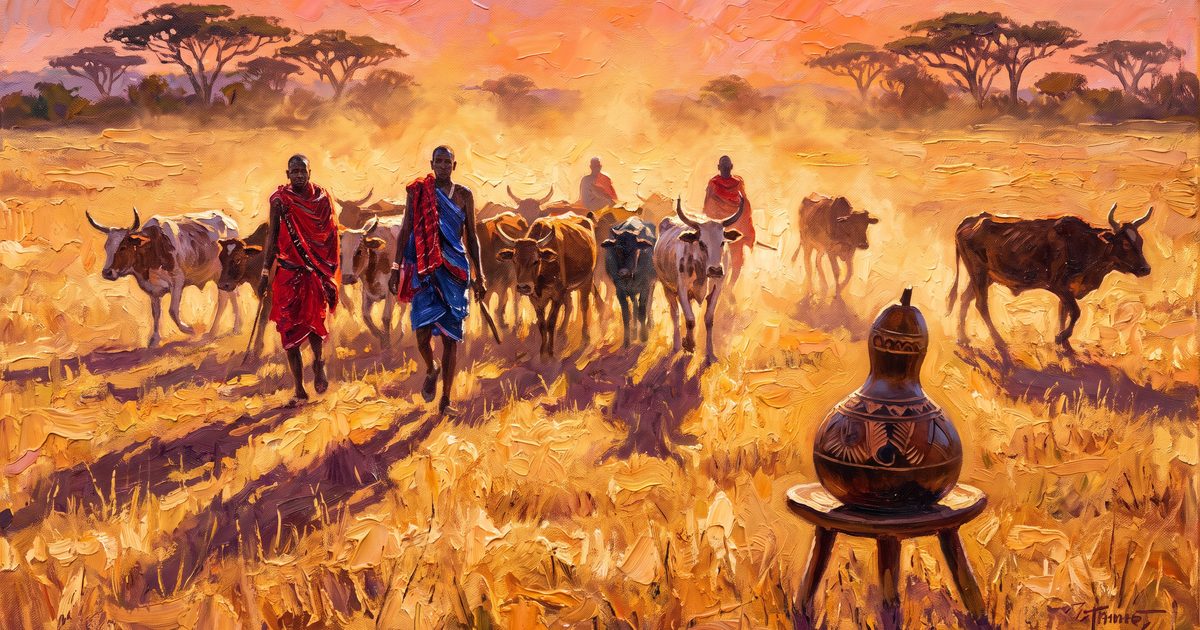
Pastoral Africa is the largest raw-milk civilization in human history, and the least cited in raw-milk debates, which tend to argue about Vermont and California.
Which cultures built their diet on raw milk?
The map is continental. The Maasai and Samburu of Kenya and Tanzania. The Fulani; the world's largest nomadic pastoral group: ranging from Senegal across the Sahel to Cameroon and beyond. The Nuer and Dinka of the Nile basin, cattle economists of South Sudan. The Himba of Namibia's Kaokoveld. The Beja of the Red Sea hills. For these cultures, the herd was bank, pantry and identity at once: milk drunk at milking time, blood drawn harmlessly from living animals, meat for ceremony and sale.
What did they actually do with the milk?
Fresh and raw at the morning milking, but the greater volume, in a hot climate with no refrigeration, went sour on purpose. The Kalenjin of Kenya make mursik: milk fermented in gourds cured with ash from specific trees, which flavors it and contributes antimicrobial compounds. The Maasai make kule naoto. The Hausa of West Africa make nono; Sudanese herders make gariss. Each is a local lacto-fermentation: acidity rises, pH falls, the milk keeps for days instead of hours. In effect, the soured gourd was the savanna's cold chain, and a partial safety system, since acid inhibits some (not all) pathogens.
What does genetics add?
Something remarkable: East African pastoralists carry their own lactase-persistence variants, different mutations from the European one, rose to high frequency among herder populations within the last few thousand years, converging on the same trait from different genetic starting points. Where cattle went, the ability to digest milk as an adult followed. The separate folio on lactase persistence covers this in depth.
The honest risk ledger
The romantic version of raw-milk pastoralism omits its epidemiology. Brucellosis and bovine tuberculosis, both transmissible through unpasteurized milk, are documented disease burdens among pastoralist communities, the reason many herding households boil their milk routinely, and have for generations. Weston Price passed through parts of this world in the 1930s and admired the physiques; the public-health literature of the same regions reads less romantically.
Risk note: raw milk, anywhere, carries pathogen risk (Salmonella, E, coli O157: H7, Listeria, Campylobacter, Brucella, M, bovis) — the list is short and serious. Origin quality, herd testing and hygiene mitigate it; nothing eliminates it. Pregnant women, children under five, the elderly and the immunocompromised bear the highest risk from consumption anywhere.
The African material changes the terms of the raw-milk argument. It shows a continent-scale, millennia-deep food system built on milk that was usually raw, often soured, occasionally boiled, managed by tradition, ash, and the acid of the gourd rather than by law.
Frequently asked questions
Which African cultures traditionally drink raw milk?
Why did African herders sour their milk?
Is raw milk from pastoralist herds safe?
Key points
The summary search engines extract.- Dozens of African cultures are dairy-centered: Maasai and Samburu (Kenya/Tanzania), Fulani and relatives across the Sahel, Nuer and Dinka (Nile), Himba (Namibia), Beja (Red Sea hills).
- Milk was consumed fresh and raw at milking, but the greater volume was soured: mursik (Kalenjin, ash-cured gourds), kule naoto (Maasai), nono (Hausa), gariss (Sudan).
- Souring is lacto-fermentation: acidity lowers pH, favoring safety and shelf life in climates without refrigeration.
- East African pastoralists carry their own lactase-persistence genetic variants: distinct mutations, the same dairying result.
- Raw milk in these settings transmits real disease: brucellosis and bovine tuberculosis are documented burdens; boiling milk is a common and rational safety practice.