1,164catalogued grass-fed beef sources in the atlas
72 °Cthe temperature at which food stops being raw and becomes another product
1 dayhow long it takes to see whether food has been untouched
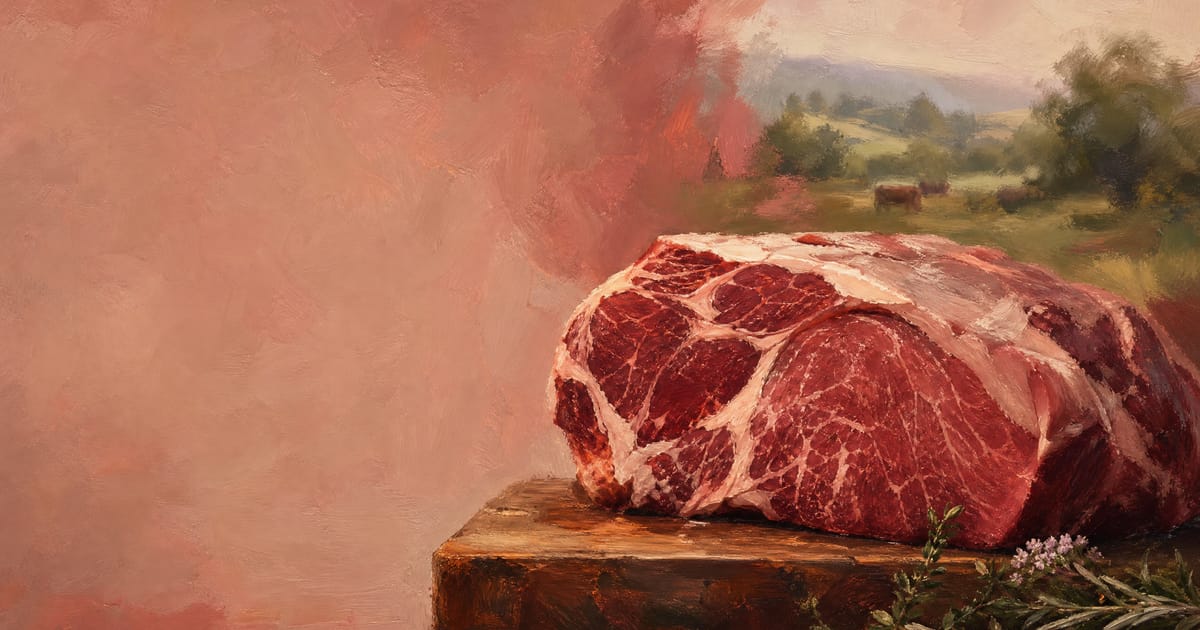
Grass-fed meat is not a marketing category: it is a measurably different food. Grass beta-carotene tints the fat yellow, CLA concentrates in the subcutaneous fat, and the fatty-acid profile approaches wild bluefish. A piece of yellow fat says more than any label.
The industry’s most profitable confusion is the difference between grass-fed and grass-finished. Legally, “grass-fed” means the animal touched grass at some point. The finishing, the final weeks before slaughter, decides the fat composition, and that is where feedlots sneak the grain in. If the finishing was not pasture, the numbers do not exist.
The pH trick nobody mentions
The rumen of a pasture animal is an alkaline, stable environment. Switch to grain and the pH falls, the bacterial ecosystem shifts, and acid-resistant strains like O157:H7 appear, able to cross the human stomach’s acid. The Cornell study that cut the strain a thousandfold by switching to hay for five days proves the risk belongs to the system, not the meat.
Context: where to find it
Sales vary by country: farm-direct, buying clubs, butchers with own break-down, or online orders shipped from the ranch itself. This map is about specific ranchers, with native breeds and named pastures, whom you can ask how the animal they are selling you was finished.