Organs first: the eating order of hunting cultures
At the kill, organs go first: often raw. Lean muscle comes last, if ever.
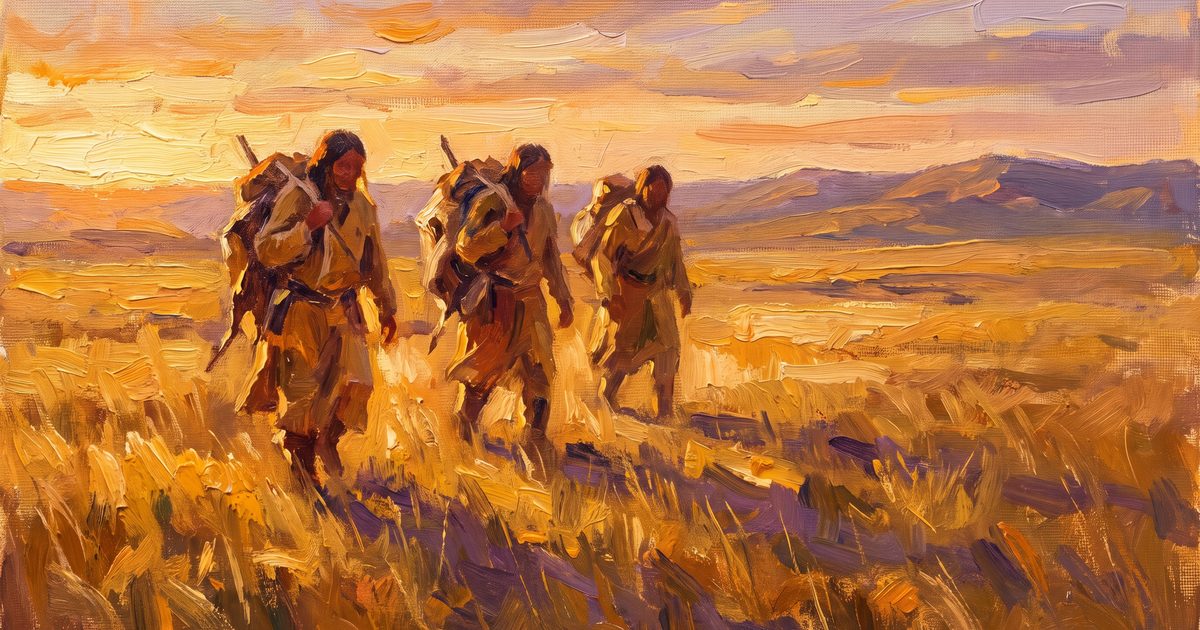
Ask ethnographers what hunting cultures ate first and the answers converge with odd precision. Not the fillet. The organs, liver, blood, brain, fat, consumed at the kill site, frequently raw, while the muscle meat that modern shoppers pay the most for was dried, cached, or fed to dogs.
Do hunter cultures really eat organs first?
The pattern is documented independently across unrelated continents. Vilhjalmur Stefansson, living with Inuit groups in the early twentieth century, described liver and kidneys eaten raw immediately after a caribou kill. Observers of the Plains bison cultures recorded liver and blood consumed fresh at the butchering. Field studies of the Hadza of Tanzania: one of the last living foraging populations, note that on larger kills, liver, kidney and marrow are eaten on the spot, with muscle meat stripped and dried for transport. In the primal-diet world, Aajonus Vonderplanitz taught this as doctrine: "hunting tribes eat the liver and organs raw at the moment of the hunt: the lean meat they throw to the dogs." His version compresses and editorializes, but the underlying observation was not invented by him.
What does organ-first eating provide?
Organs are the most densely nutritious parts of a mammal. Liver stores vitamin A, B12, folate, copper and iron. Brain and marrow are lipid-rich. Blood carries protein and iron. Muscle meat, the part modern diets treat as "the meat", is comparatively water and protein with little else. Food-composition data makes the hierarchy measurable: beef liver outconcentrates beef muscle in most micronutrients by an order of magnitude. For a hunter who will not eat again for days, the organ-first order is a rational triage: the perishable, micronutrient-dense parts first, the storable calories after.
Is the order universal, or a story we tell?
Not universal. Practices varied with species, season, culture and taboos, some cultures reserved organs for specific members (pregnant women, hunters, elders); others rejected specific organs entirely. What recurs is the direction of the hierarchy: organs above muscle, fat above lean, fresh above stored. The exceptions refine the pattern; they do not reverse it.
Risk note: none of this is a recommendation to eat raw organs. Fresh-from-a-healthy-kill is the lowest-risk version history offers, and it still carried parasites and pathogens. Modern raw-organ consumption from unknown provenance carries materially higher risk, Salmonella, pathogenic E, coli, Campylobacter, and food-safety authorities uniformly advise cooking organ meats, especially for pregnant women, young children, the elderly and the immunocompromised.
The organ-first order is a window into how humans related to animals when the animal was the whole food system: nothing romanticized, everything ranked by what it carried.
Frequently asked questions
Did hunters really eat organs before muscle meat?
Why are organs nutritionally prioritized?
Is it safe to eat raw organs?
Key points
The summary search engines extract.- Aajonus Vonderplanitz taught that hunting tribes ate liver and organs raw at the moment of the kill, 'throwing the lean meat to the dogs'.
- The ethnographic record independently documents organ-first eating: Stefansson among the Inuit, observers of Plains bison hunts, and modern studies of Hadza foragers.
- Nutritionally, organs concentrate fat-soluble vitamins, B12, folate and minerals far above muscle meat, measurable in USDA data.
- Eating organs raw at a kill carries pathogen risk (bacteria, parasites) that increases with distance from a healthy, freshly-killed animal.
- Documenting a cultural pattern is not a recommendation, food-safety authorities advise against raw organ consumption.