Beef liver: the most nutrient-dense food documented
Not a marketing superfood: the most nutrient-dense food standard analysis has ever measured.
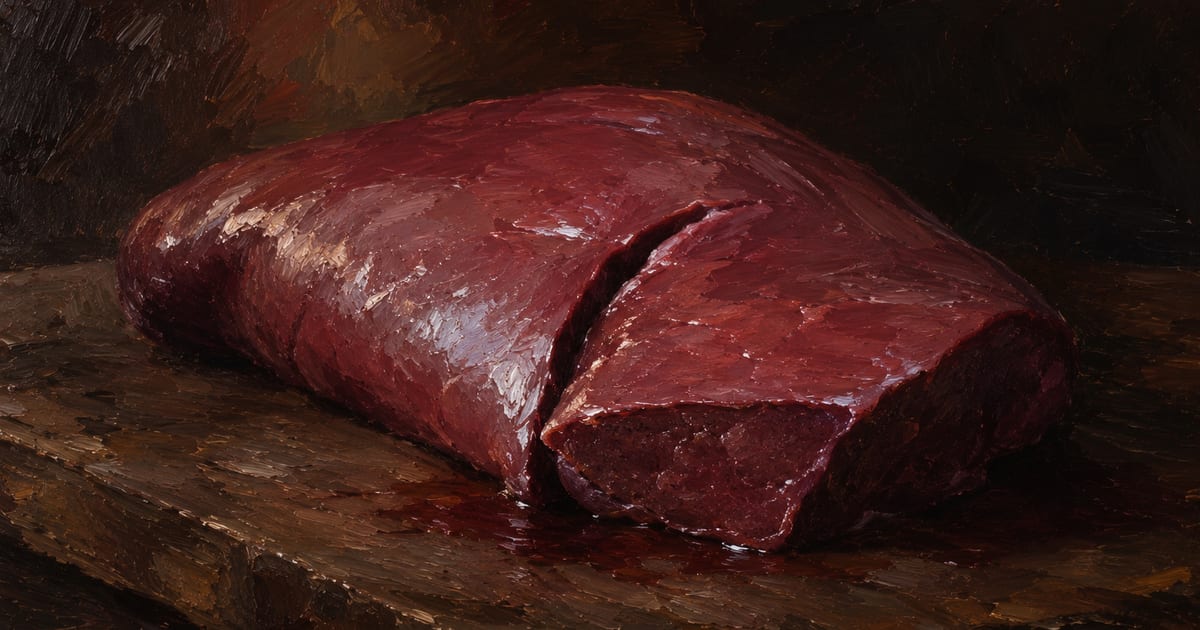
Beef liver is not a superfood in the marketing sense. It is the most nutrient-dense food measured by standard nutritional analysis, with no close competitor in the conventional food supply.
Per 100 g of raw grass-fed beef liver
Vitamin B12: 70–83 mcg (2,917–3,458% NRV). Vitamin A (retinol, not beta-carotene): 4,968–6,582 IU. Folate: 212–290 mcg (53–73% NRV). Iron (heme): 4.9–6.5 mg (27–36% NRV). Copper: 9.7–14.6 mg (1,078–1,622% NRV). Zinc: 4–5.8 mg (36–53% NRV). CoQ10: 3.9–4.5 mg. Selenium: 32–39 mcg (58–71% NRV).
Grass-fed vs grain-fed
Grass-fed liver has higher omega-3 content, higher retinol (vitamin A), higher CoQ10, and a cleaner toxin profile. The liver is a detoxification organ, it does not store toxins, but it does reflect the metabolic health of the animal.
The raw vs cooked question
Cooking liver above 70 °C denatures its proteins and reduces B12 bioavailability. The primal recommendation is consumption raw or very lightly seared. Traditional cultures, Maasai, Inuit, Plains Native Americans: ate liver raw immediately after the kill.
Dose
Liver is potent medicine. A little goes a very long way. Think condiment-dose, not steak-dose, 30–60 g a few times per week is more than sufficient for most people.
Key points
The summary search engines extract.- 70–83 mcg B12 per 100 g — 2,917–3,458% of Nutrient Reference Value (NRV); no other food comes close.
- Vitamin A is retinol (pre-formed, immediately usable), not beta-carotene (requires conversion).
- Copper: 9.7–14.6 mg per 100 g, monitor total intake if eating liver daily; excess copper is possible.
- Grass-fed liver has measurably higher retinol, omega-3 and CoQ10 than grain-fed.
- Raw or lightly cooked (seared exterior, raw interior) maximizes B12 bioavailability.