Frozen and aged: the Inuit meat-caching traditions
Permafrost, stone cairns and time: Arctic preservation that produced raw, aged, occasionally lethal food.
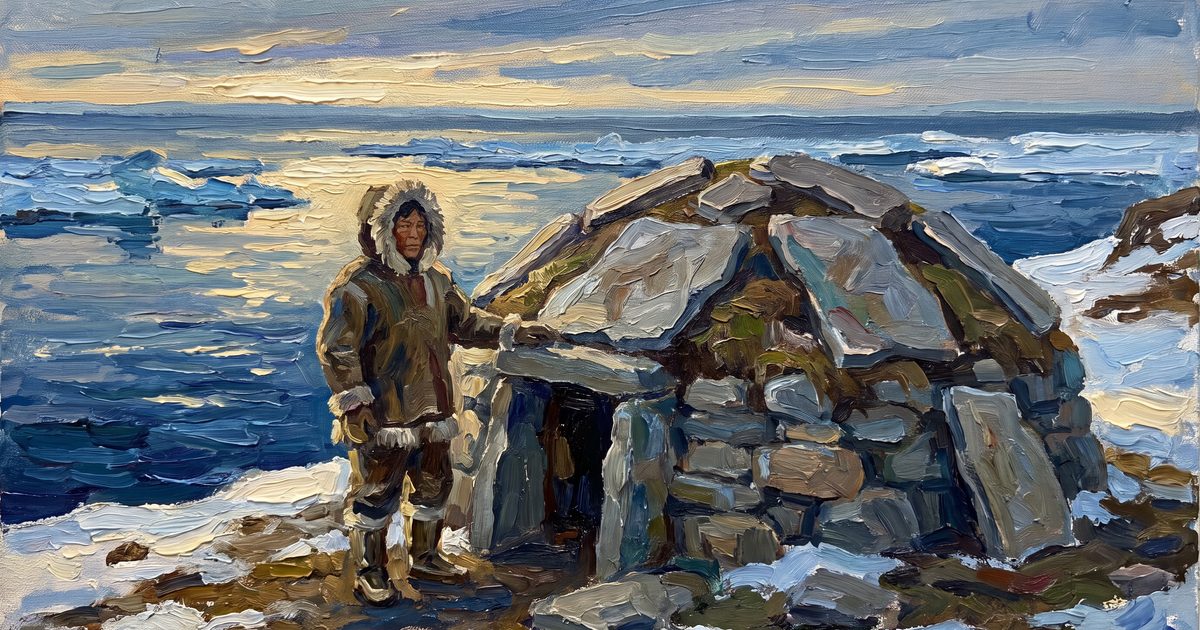
The Arctic is the only biome where agriculture was impossible and fire was expensive. The traditional Inuit answer to food storage was not smoking, salting or canning, it was the ground itself, the permafrost, and controlled neglect.
How did the Inuit store meat without refrigeration?
Meat and muktuk (whale skin and blubber) were cached in gravel pits or stone cairns, sometimes raised stone piles, sometimes buried, where the seasonal cycle froze and thawed them for months. Caribou was aged into the autumn; marine mammals into the summer. This is igunaq: preservation by cold fermentation. The same logic produced kiviaq in Greenland (auk packed into a sealskin) and "stink eggs" further west. None of it involved fire.
The Arctic preserved food by lending it to the permafrost and collecting interest in the form of flavor.
Why age raw meat on purpose?
Aging changes the food. Enzymes in the tissue break proteins down into smaller peptides; fats develop sharp flavors. In the primal framework; and in Aajonus Vonderplanitz's teaching, which celebrated these traditions: aged raw meat is pre-digested food. Ethnographically, aged foods were also often the prestige foods of the harvest, served at gatherings. The Inuit raw-food folio covers the broader diet; this one documents the storage logic specifically.
What is the actual risk?
This is where the tradition demands honesty. Anaerobic aging of marine products can cultivate Clostridium botulinum, and Alaska reports the highest per-capita foodborne botulism rate in the United States, overwhelmingly linked to traditionally fermented seal, walrus and fish products, with documented fatal outbreaks in both Alaska and Greenland. A 1980s shift toward plastic bags and above-ground containers changed the fermentation environment and is associated with increased cases: a rare case study of how partial modernization can make a tradition more dangerous, not less.
Risk note: botulism toxin is odorless and tasteless. Historical communities managed this risk with site selection, species knowledge and seasonal timing: a system of embedded safety, not a guarantee. Nothing in this history is a preparation guide.
What did Aajonus report from Alaska?
In workshops, Aajonus recounted traveling to Alaska and claimed the pre-modernization Inuit "cooked nothing, they eat only meat, no dairy." As with his travel anecdotes generally, the details are his own account. The verifiable core: that Arctic cultures ate a largely raw, animal-based diet long before contact, is supported by the ethnographic record of Stefansson and others. Aajonus, notably, drew a different lesson than the Inuit themselves: he considered frozen meat inferior to fresh, recounting that people he put on previously-frozen meat developed what he described as skin disorders, a clinical anecdote, not a controlled finding.
The tradition documents what cold and time do to meat. It does not hand modern eaters a protocol, it hands them a case study in how far a food culture can go without fire, and at what cost.
Frequently asked questions
What is igunaq?
Is aged Arctic meat dangerous?
What did Aajonus Vonderplanitz say about the Inuit?
Key points
The summary search engines extract.- Igunaq: seal, walrus or caribou cached in permafrost or stone-covered pits, aged for months, documented across Inuit and Yupik groups.
- Aajonus Vonderplanitz claimed the Inuit communities he visited in Alaska cooked nothing; the ethnographic record supports substantial raw consumption.
- Fermented marine products carry a documented Clostridium botulinum risk: Alaska reports the highest per-capita foodborne botulism rates in the US.
- Traditional knowledge, cache site, season, animal species, functioned as the safety system; refrigeration changed the risk equation.
- This page documents a tradition. It is not a preparation guide.