Where to buy raw milk in Spain
The law that ended the limbo, the bottling farms, the weekly routes into the cities.
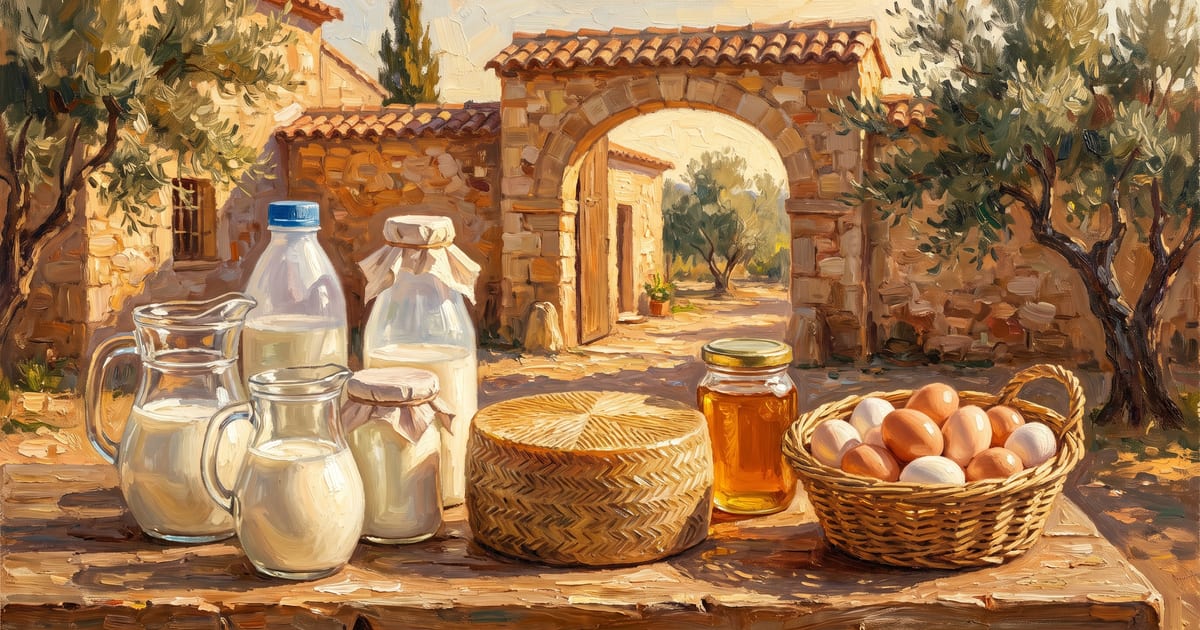
Spain spent years in a legal limbo. The old RD 640/2006 allowed producers to supply small quantities of primary products directly to the final consumer, but expressly excluded raw milk from that allowance. The result was neither legal nor illegal: farm-gate raw milk survived only where a regional authority chose to look away.
That limbo ended on 10 December 2020, when Real Decreto 1086/2020 was published. It repealed RD 640/2006 and regulated, for the first time at the national level, the direct sale of raw milk to the consumer. Spain could have banned it: Article 10.8 of Regulation (EC) 853/2004 lets member states restrict raw milk sales, and Scotland and Norway use exactly that door. Spain chose the opposite: the regulation's own preamble states plainly that Spain has never used that clause, and that raw milk is marketable as long as the hygiene package requirements are met.
What the law requires (art. 27)
- An authorized establishment, registered in the RGSEAA (Registro General Sanitario de Empresas Alimentarias y Alimentos). A farm without a registration number cannot legally sell you raw milk. Full stop. - Always bottled — no filling your own jug from the tank. The container is sealed immediately after filling, with a closure designed to show it has been opened. - Exact label wording: «Leche cruda sin tratamiento térmico: Consumir únicamente tras hervir durante al menos un minuto» and «Conservar en refrigeración entre 1 y 4 ºC». - A use-by date of at most 3 days after milking, Spanish raw milk is sold fresh, in a tight weekly rhythm, not as a long-life product. - Cold chain at 1–4 °C at the point of sale. - Retail shops may only use raw milk as an ingredient if they boil it first, and hospitals, nurseries, schools and care homes may not serve it at all.
The herd must meet the EU hygiene package (Regulations 852/2004 and 853/2004): brucellosis- and tuberculosis-free status, plus microbiological criteria for germ counts and somatic cells. The framework drew on the EFSA scientific opinion on raw drinking milk (2015) and the AESAN Scientific Committee report (2020).
How you actually get it
1. Farm-gate sale, the dominant channel. The bottle comes out of the farm's own cold room; you ask about the herd, the breed, the grass. The Spanish scene is small but real, and has grown steadily since the 2020 regulation gave it a floor to stand on.
2. Weekly farm distribution, the signature of the Spanish model. Some farms deliver bottles to cities on fixed days: the reference case is Cooperativa Crica, which delivers every Monday and Tuesday in Madrid, Segovia and Valladolid (retail price in Madrid shops: 3.34–4.50 €/L). Ask your nearest farm whether it runs a route to your city, many do without advertising it.
3. Co-ops and buying groups — they buy at the farm and distribute among members, common in the peri-urban belts of Madrid and Barcelona.
4. Vending machines, Spain has been slower than Italy here; the bottle-at-the-farm route dominates. Search terms: máquina de leche cruda, leche cruda de granja.
The farms, by region
- Castilla y León: Cooperativa Crica (Megéces, Valladolid): the national reference: an organic cooperative with its own health registration (RGSEAA), rotational grazing, its own creamery, weekly distribution and group visits with tasting. - Euskadi: the highest density in the country, Behieko Sabekoetxea (Altzo, Gipuzkoa) and Bizkaigane (Errigoiti, Bizkaia) sell at the farm. - Cataluña: El Pujol (Calldetenes, Barcelona), Granja de Vacas Cal Manyà, Cobardes y Gallinas. - Galicia: Lácteos Conchy (Madelos).
Raw cheese: the second life of Spanish raw milk
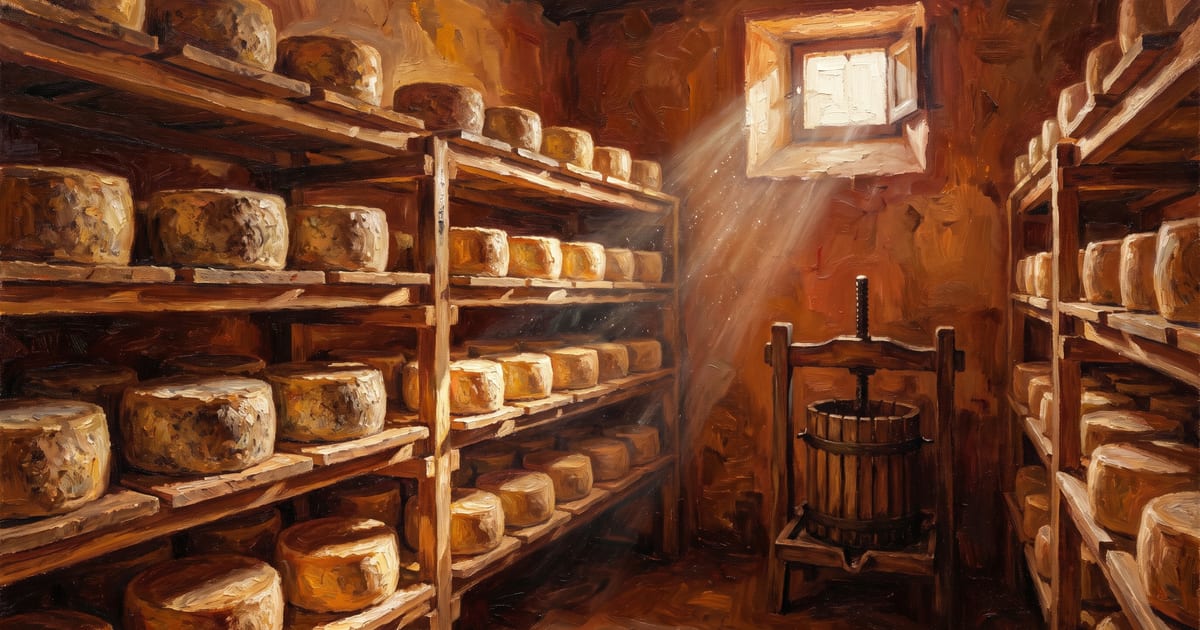
If no farm is within reach, cheese is where Spanish raw milk already lives at scale. The rules allow cheese made from raw milk with a maturation of 60 days or more, and Spain has one of Europe's richest farm-cheese traditions: sheep's cheese from Castilla, blue cheeses from Asturias, Basque idiazabal, Galician tetilla. A wedge of raw-milk cheese from a farmhouse creamery is the same supply chain in a more portable form.
What to verify with the producer
- The RGSEAA number, ask for it; a legal seller shows it without blinking. - Milking date vs. use-by date, by law, at most 3 days apart. Milk near its date is not "about to turn"; the window is simply short. - Herd certification for brucellosis and tuberculosis, legally required, and a farm proud of its standards will have the paperwork ready. - Breed and feed: A2 genetics (Jersey, Guernsey) matter for digestive tolerance; ask whether the herd is on full grass or grain-supplemented. - Cold chain: the bottle should come out of a fridge at 1–4 °C, not a counter.
Find verified sources
The PrimalFinder Atlas lists Spain's verified raw-milk farms with locations; the honest, short list of a young market:
→ See raw milk sources in Spain on the PrimalFinder Atlas
The practical rule is the same as anywhere: buy where you can see the herd, or on the word of someone who did. In Spain, since December 2020, doing it legally is finally simple: registered farm, sealed bottle, three-day window, boiling advisory on the label: everything else is conversation at the farm gate.
Key points
The summary search engines extract.- Direct sale of raw milk to the consumer is legal nationwide under Real Decreto 1086/2020 (art. 27), which replaced the old regime that excluded raw milk from direct supply: supermarket sale remains outside the model.
- The farm must be authorized and registered in the RGSEAA; if there is no registration number, there is no legal sale.
- Raw milk is always sold bottled, never from the tank, with a tamper-evident seal, kept at 1–4 °C.
- Mandatory label wording: «Leche cruda sin tratamiento térmico: Consumir únicamente tras hervir durante al menos un minuto»: and a use-by date of at most 3 days after milking.
- Retail can only use it as an ingredient if boiled first; hospitals, nurseries, schools and care homes cannot serve it at all.
- The Spanish model's signature is weekly farm distribution to cities — Crica (Valladolid) delivers to Madrid, Segovia and Valladolid every Monday and Tuesday.