The raw milk vending machines of Europe
A village wall, a euro coin, that morning's milk: Europe's self-service dispenser network.
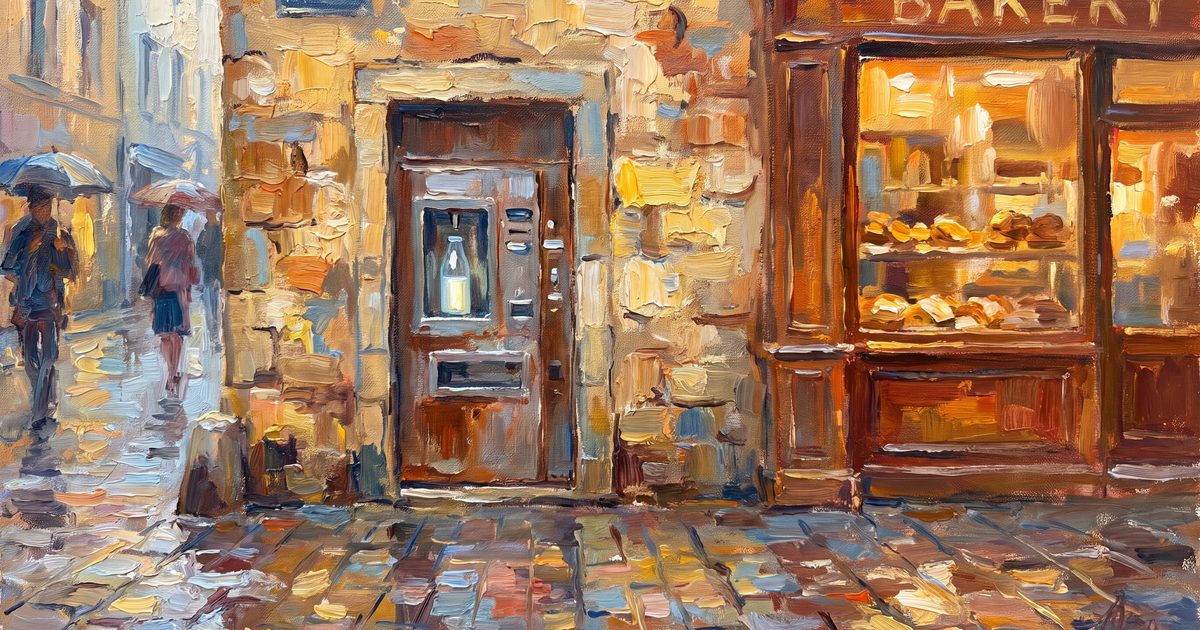
Somewhere between the farm gate and the supermarket aisle, Europe built a third channel for raw milk: a refrigerated box that sells it around the clock, a coin or card at a time.
Where are raw milk vending machines in Europe?
Italy runs the densest network in Europe, machines appeared in Italian cities in the early 2000s, before the national framework caught up, and today the country has more raw milk dispensers than anywhere else in the world. Germany follows with its farm-gate Milchautomaten, thousands of them across Bavaria and the Rhineland. France operates distributeurs à la ferme across Normandy, Brittany and the alpine dairy regions. Austria, the Netherlands (automelk at the farm door), Slovenia, the Czech Republic and Spain add their own networks. The pattern repeats: a farm with surplus milk, a machine, and a village that never lost the habit.
How does a raw milk vending machine work?
The farmer installs a refrigerated dispenser connected to a bulk tank, usually fed by that day's or the previous day's milking from the farm's own herd. Customers bring a bottle or buy one at the machine, pay by coin or card, and the milk is drawn chilled: around 4 °C, straight from the tank. The machine logs sales, keeps temperature records, and is cleaned on a fixed protocol. What the farmer gains is the full retail margin and a 24/7 sales channel with no staff; what the customer gains is milk that skipped every intermediary.
What rules govern the machines?
At EU level, Regulation (EC) 853/2004 defines raw milk, milk not heated above 40 °C nor subjected to equivalent treatment, and sets the hygiene requirements for the farms that produce it. The vending operation itself is national law, and the details vary: registered premises, cleaning schedules, labeling that names the producer and batch, a consume-by window that is usually counted in days, and continuous refrigeration with temperature logging. In several countries the label or a notice adds explicit advice for pregnant women, children, the elderly and the immunocompromised, the same groups authorities everywhere advise against raw milk.
What are the real risks?
The same as raw milk anywhere, with two machine-specific factors. First, the cold chain: a machine failure or a power cut silently breaks it, so the consume-by window is not a formality. Second, the bottle: an unclean reusable bottle can contaminate milk that left the tank clean. Underneath both sits the farm's own hygiene, the machine amplifies whatever the tank contains. Outbreaks traced to vending milk are documented in the European literature, as they are for farm-gate sales. The vending format makes raw milk accessible; it does not make it safer.
Risk note: raw milk can carry Salmonella, pathogenic E, coli, Listeria, Campylobacter and other pathogens. Quality of origin, testing and refrigeration mitigate the risk; nothing eliminates it. Pregnant women, young children, the elderly and the immunocompromised are advised against consuming raw milk in any format.
The vending machine is the most European answer to the raw milk question: not a legal battle, but a coin-operated truce between a regulation written for industry and a village that still wants its milk the way it always had it.
Frequently asked questions
Which European countries have raw milk vending machines?
Is milk from a vending machine pasteurized?
What rules apply to raw milk vending machines?
Key points
The summary search engines extract.- Italy runs the densest raw milk vending network in Europe; Germany, France, Austria, the Netherlands, Slovenia and others follow with farm-gate machines.
- EU framework: Regulation (EC) 853/2004 defines raw milk and sets hygiene requirements; vending operation itself is governed by national rules.
- Typical machine rules across countries: producer identification and batch on the label, a consume-by window of a few days, continuous refrigeration.
- Economics: the farmer captures retail margin and sells 24/7 without staff; customers bring or buy reusable bottles.
- Risk is not zero: vending is only as safe as the farm's hygiene, the cold chain and the bottle; at-risk groups are advised against raw milk everywhere.