Herd shares: owning a piece of the cow
You don't buy the milk: you already own the cow: the herd-share architecture.
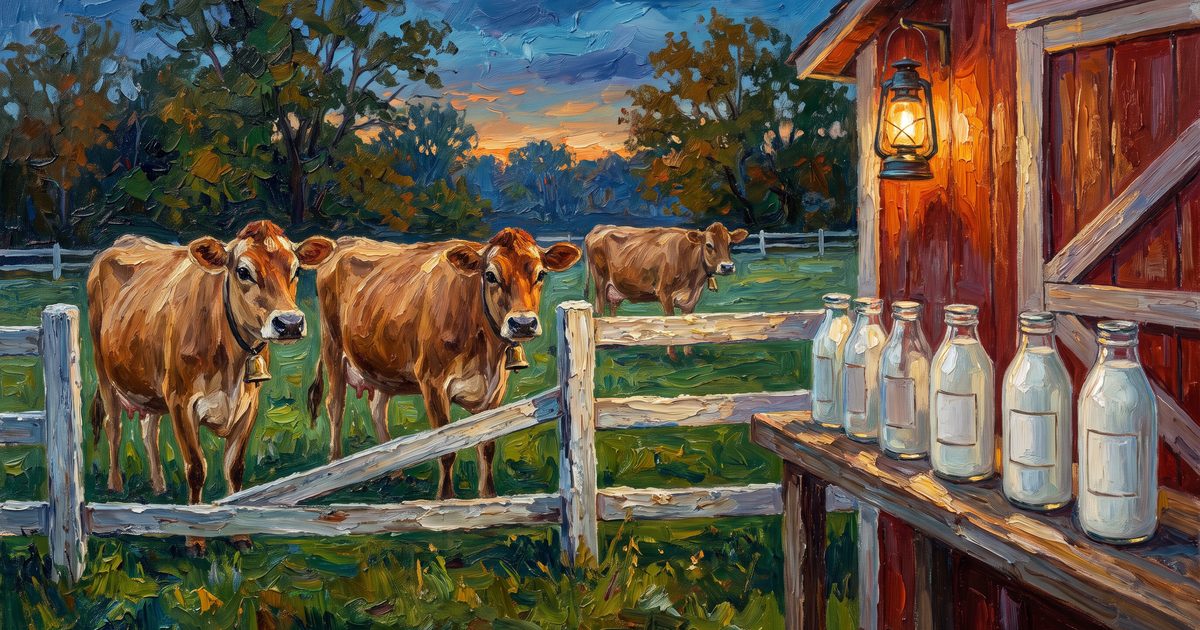
Of all the instruments built around raw milk, the herd share is the most American: where the law blocked a transaction, ownership redefined it.
What is a raw milk herd share?
The mechanics are simple. A dairy animal, or a herd, is divided into ownership interests. A consumer buys one: a one-time payment for, say, a fraction of a Jersey cow. Then they pay the farmer a recurring boarding fee covering feed, milking, bottling and refrigeration. When the cow is milked, each owner receives their proportional share. No retail sale ever occurs, in theory: the milk is simply being collected by the people who own the animal that produced it. The share agreement is a real contract: it assigns ownership, responsibilities, and what happens if the cow dries up or dies.
How did herd shares emerge?
The catalyst was federal. In 1987 the United States banned interstate sales of raw milk packaged for human consumption, after a court-ordered FDA rulemaking, leaving raw milk a matter of individual state law. Some states permit retail sales; many restrict them to the farm gate; some ban them outright. Into the gaps walked the share model, reviving an old common-law intuition: you cannot regulate what someone does with their own animal. By the 2000s, herd shares operated across a patchwork of states, celebrated in raw milk communities as peaceful resistance and criticized by public health authorities as a loophole around exactly that.
Where do shares operate?
Across the US, the map has three colors. States that expressly permit shares by statute or policy. States that prohibit them, treating the boarding arrangement as a disguised sale. And states that are silent, where shares exist at the discretion of local enforcement until a legislature or court says otherwise. The colors move: bills legalizing or banning shares appear in statehouses every session. Outside the US the model is mostly redundant: Europe legalized farm-gate sales, so there is nothing to route around. In Canada, where raw milk sales are prohibited, share-style arrangements have operated and been prosecuted; the legal theory is contested rather than settled.
What are the documented risks?
The contract changes the legal relationship; it changes nothing in the tank. CDC and state health department investigations have traced outbreaks of Campylobacter, Salmonella, E, coli O157: H7 and other pathogens to herd-share dairies, as they have to licensed farm-gate sellers. A share can even degrade oversight: in some states, milk distributed to owners falls outside routine inspection regimes that would apply to a licensed seller. The buyer's due diligence, herd testing, hygiene, cold chain, matters as much as in any direct purchase, with less institutional visibility.
Risk note: raw milk in any legal wrapper carries pathogen risk. Boarding contracts, ownership certificates and community trust mitigate nothing microbiologically. Pregnant women, young children, the elderly and the immunocompromised are advised against raw milk regardless of how it is acquired. Nothing here is legal advice; the regulatory map shifts year to year.
The herd share is worth understanding even for readers who will never sign one. It is the clearest demonstration that raw milk regulation is not a single question of science but a jurisdiction-by-jurisdiction negotiation over what a transaction even is: and that where law and appetite collide long enough, someone will eventually lawyer the milk.
Frequently asked questions
What is a raw milk herd share?
Are herd shares legal in the US?
Why don't herd shares exist in Europe?
Key points
The summary search engines extract.- A herd share splits ownership of a dairy animal among consumers, who pay a boarding fee and receive a share of the milk; positioned as collecting one's own property, not buying a product.
- The model grew after the 1987 US federal ban on interstate raw milk sales for human consumption pushed the trade into state-level territory.
- Treatment of shares varies across US states: some expressly permit, some prohibit, many stay silent: a patchwork that shifts with each legislative session.
- In most of Europe farm-gate direct sales make shares unnecessary; Canada's prohibition pushes sharing into a challenged gray zone.
- Outbreaks linked to herd-share milk are documented in CDC investigations; a contract does not change the microbiology of the tank.