Raw milk kefir: what it is and how to make it
A living culture that cannot be patented, only passed from hand to hand.
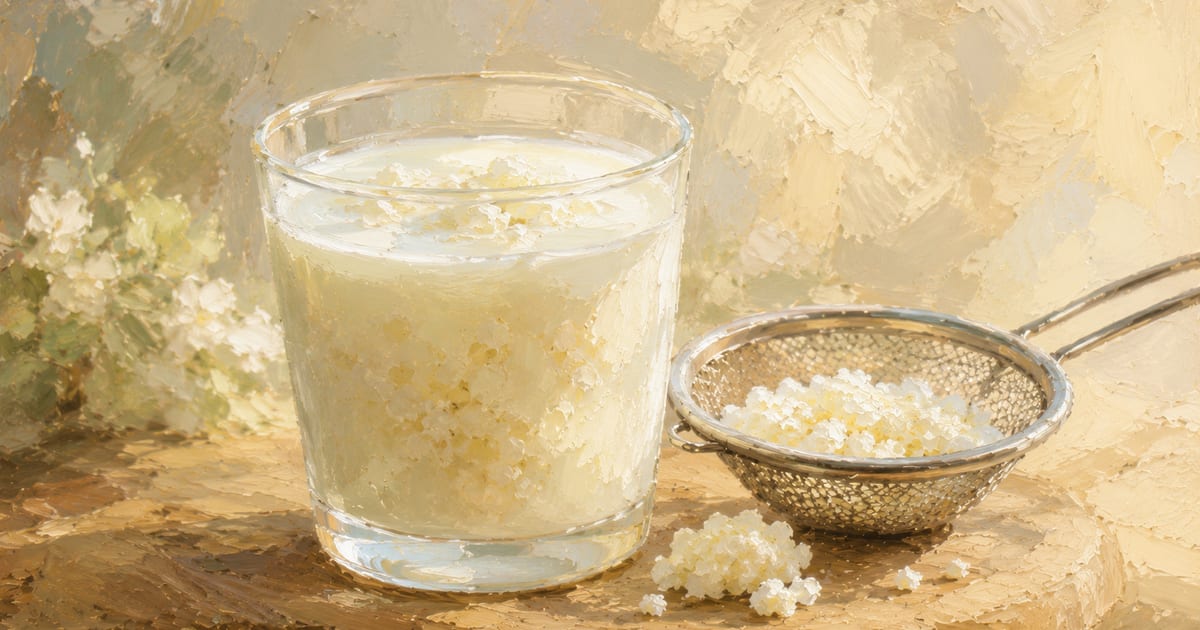
Kefir is not yogurt. The difference is not about taste, it is about microbial complexity. Yogurt is made with 2–3 defined bacterial strains. Traditional kefir made with live grains contains up to 61 bacterial and yeast species in a complex symbiotic community.
What kefir grains are
The SCOBY (symbiotic community of bacteria and yeasts) that makes kefir is called "kefir grains", polysaccharide and protein matrices that house the microbial community. They are living organisms. Unlike yogurt starters, they grow, reproduce and can last indefinitely if properly maintained.
Raw milk kefir vs commercial kefir
Commercial kefir is made from pasteurized milk with added starter cultures. It has far lower microbial diversity. Raw milk kefir ferments in a living medium, generating a different biochemical environment. The live bacteria in the raw milk itself participate in the fermentation alongside the grain community.
How to make it
Add kefir grains (1–2 tablespoons) to raw milk (500 ml) at room temperature. Cover with cloth. Leave 24–48 hours depending on temperature and desired acidity. Strain through a non-metal sieve (metal can damage grains). The liquid is kefir. Return grains to fresh raw milk to repeat.
On raw milk, kefir is a quiet compromise: it keeps the living cultures while the fermentation itself lowers the microbiological risk. It is the gentlest door into raw dairy.
Key points
The summary search engines extract.- Traditional kefir grains contain up to 61 bacterial and yeast species, far more than any commercial product.
- The SCOBY (grains) are living organisms that reproduce and last indefinitely with proper care.
- Raw milk kefir ferments in a living medium, the milk's own bacteria participate in fermentation.
- Lactose is significantly reduced during fermentation — most lactose-intolerant people tolerate kefir.
- Never use metal implements with kefir grains: use glass, ceramic or plastic only.