Clabber: what soured milk was before it spoiled
The food only raw milk can make, its disappearance is the cleanest experiment on record.
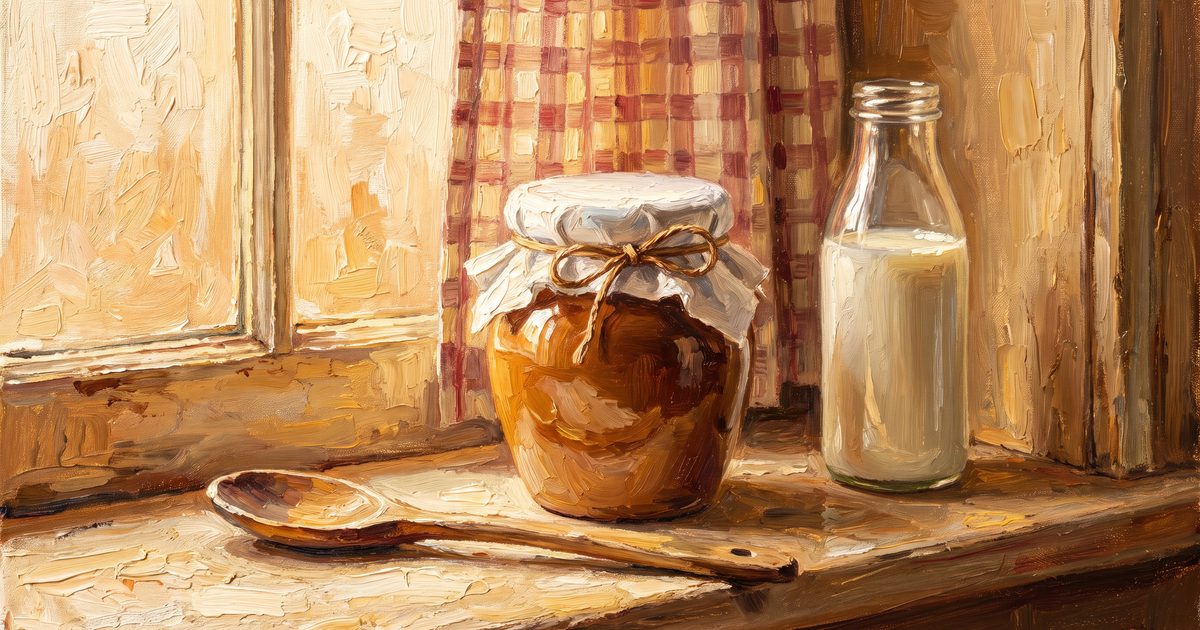
Every food culture keeps one dish that embarrasses the modern palate just by existing. In the American South it was clabber: milk that sat out until it turned, on purpose.
What was clabber?
The word is old, Shakespeare used it for mud and curds both. The food is simpler than the word: raw milk, left in a crock at room temperature overnight or longer, soured and thickened by its own lactic acid bacteria into something between yogurt and sour cream. Irish and Scots-Irish settlers carried the habit to Appalachia and the South, where it became ordinary breakfast; eaten with molasses, sprinkled sugar, or crumbled cornbread: through the nineteenth century and deep into the twentieth. There was nothing countercultural about it. It was what milk did before anything intervened to stop it.
Why did clabber disappear?
Not fashion, chemistry. Two technologies removed the food from underneath the habit. Refrigeration removed the necessity: milk no longer sat at room temperature because it no longer had to. And pasteurization removed the possibility: heat-treated milk lacks the living lactic acid bacteria that turn milk into clabber. Pasteurized milk left out does not sour into anything worth eating, it spoils, with off-odors and texture that signal decay rather than fermentation. The crock on the counter stopped being a food and became a mistake.
Souring versus spoiling: the actual difference
This distinction is the scientifically interesting part. Raw milk comes loaded with lactic acid bacteria that, given time and warmth, convert lactose to lactic acid. The rising acidity thickens the milk, creates the tang, and suppresses most competing microbes: the same logic as yogurt or sauerkraut, happening spontaneously. Spoiling is what happens when that process is disabled: kill the lactic bacteria first, and the remaining spore-formers and contaminants decompose the milk without any preservation effect. Raw milk sours; pasteurized milk rots. The primal-diet tradition treats this as the central lesson about processing, and whatever one concludes from it, the underlying microbiology is not in dispute.
What Aajonus said about old milk
In the primal framework, this history carries doctrinal weight. Aajonus Vonderplanitz told his audiences to remember that "old milk is always better, because like with high meat, it is decomposing", placing soured dairy, deliberately aged, among the most valued foods of his protocol. That is his position, rooted in his clinical worldview, not a scientific consensus; mainstream food safety reaches the opposite conclusion about intentionally soured raw milk. The gap between those two positions is the entire raw milk debate in one jar.
The risk, stated plainly
Historical normalcy is not a safety standard. Clabber's safety always depended on which microbes dominated the crock, and lactic acid bacteria do not reliably outcompete pathogens that were in the milk from the start. Brucellosis, tuberculosis, and the modern pathogen spectrum (Salmonella, E, coli O157: H7, Listeria, Campylobacter) do not respect the tang.
Risk note: leaving raw milk at room temperature is a documented risk factor, not a preservation guarantee. Food safety authorities advise against consuming raw milk in any state, and especially intentionally soured raw milk, for pregnant women, young children, the elderly and the immunocompromised. This page documents a food history; it is not a preparation guide, and no instructions should be inferred from it.
Clabber matters to the record because it is the rare food that pasteurization actually deleted, not made unfashionable, not regulated, but rendered chemically impossible. Whatever one thinks of raw milk, knowing why the crock stopped working tells you exactly what the heat was for.
Frequently asked questions
What is clabber?
Why can't pasteurized milk make clabber?
Is clabber safe to eat?
Key points
The summary search engines extract.- Clabber is raw milk allowed to sour and thicken at room temperature by its native lactic acid bacteria, a staple of Irish, Scots-Irish and Southern American foodways.
- The word is older than the country: Shakespeare used it. The food was ordinary breakfast, eaten with molasses, sugar or crumbled cornbread.
- Pasteurization ended clabber, not fashion: heat-treated milk lacks the living bacteria that sour it, so it spoils (putrefies) instead of thickening.
- Aajonus Vonderplanitz held that 'old milk is always better', comparing soured dairy to his aged 'high meat' — a core claim of his protocol, not a scientific position.
- This page documents the history. It is not a preparation guide: room-temperature raw milk carries real pathogen risk if contamination is present.