Aajonus Vonderplanitz: the man behind the Primal Diet
A controversial method, an unscientific label, and a body of testimony too large to dismiss.
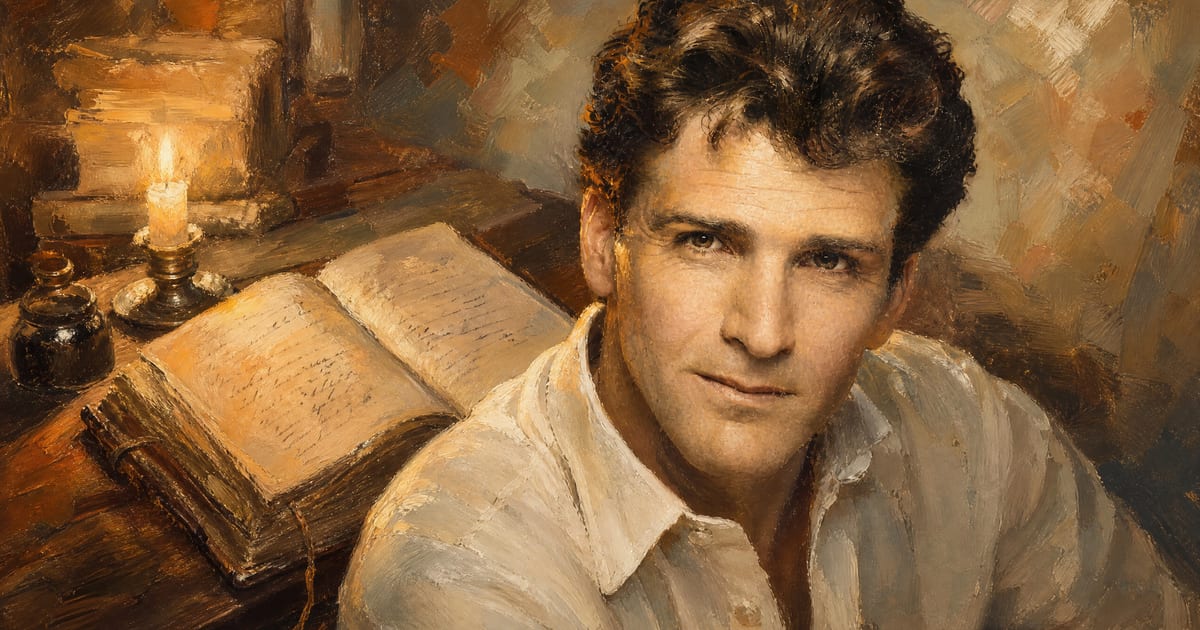
Born John Richard Swigart in Denver, Colorado, on April 17, 1947. Died as Aajonus Vonderplanitz on a farm in Thailand on August 28, 2013, following a fall from a second-floor terrace.
Between those two dates he built, from the margins of the Western medical system, the most documented and systematic raw food protocol in recent history. He called it the primal diet. He was not a doctor. He was not a credentialed nutritionist. He was a man who claimed to have cured himself of terminal cancer at 21 through carrot juice and raw dairy, and who spent the following four decades documenting how others could do the same.
Timeline: from Denver to the primal diet
1947–1968, Early years
John Richard Swigart was born in Denver into a middle-class family. By his own account, a difficult childhood marked by recurring illness and a complicated relationship with conventional medicine from an early age.
Early 1970s, Illness and the turn
In the early 1970s, Aajonus claimed to have been diagnosed with terminal cancer: in some versions of his story, multiple types simultaneously. Conventional treatments failed or were rejected. From this point he began a process of self-experimentation with raw foods: first vegetable juices, then raw dairy, then raw meat.
According to his account, remission came around age 21: the late 1960s in the earliest versions of his story, the early 1970s in later tellings. No verified medical documentation of either the diagnosis or the remission exists, it is the most disputed point in his personal history, and the origin of everything that followed.
1970s–1980s, The formative years in Los Angeles
He moved to Los Angeles, where he worked in several fields: acting (minor productions), computer programming, and increasingly informal nutritional consulting. This was the period during which he began developing the protocols he would later systematize in his books. He legally changed his name to Aajonus Vonderplanitz at some point during these years, a gesture consistent with his tendency to construct an identity entirely outside conventional categories.
1997, We Want to Live
The publication of his first book marked the beginning of his large-scale public visibility. We Want to Live combined his autobiography, the cancer story, the search, the recovery, the years of experimentation, with the foundations of the primal diet and specific protocols for different conditions. The book was controversial from day one. Supporters treated it as a reference manual; critics pointed to the complete absence of independent scientific validation of its claims.
2001: The raw milk legal battle in Los Angeles
His greatest moment of public impact came in 2001 when he led a successful campaign to lift the ban on retail raw milk sales in Los Angeles County. He was among the first activists to develop the animal-leasing model: a legal structure that made consumers symbolic co-owners of livestock, allowing them to receive raw milk as their "own produce" without the farmer technically making an illegal sale.
He founded the non-profit Right to Choose Healthy Foods (RTCHF), which became one of the first US organizations centred specifically on raw food access rights.
2002, The Recipe for Living Without Disease
His second book was more technical and less autobiographical. It contained specific dietary protocols for various health conditions, detailed raw recipes and preparations, and sourcing guides. Second-hand copies now reach £60–140: an indicator of consistent demand from an audience that finds no equivalent alternative.
2000s–2010s: The Rawesome Club and internal controversies
He was a central figure in the Rawesome Club in Venice, Los Angeles, one of the first private food clubs in the US organized around raw and unpasteurized foods. The club operated for years in the legal margins, sheltered by the same legal models Aajonus had developed.
In his later years he became involved in litigation and internal conflicts against the club's own operators and suppliers. These conflicts accelerated the project's collapse and gave him a controversial reputation even within the raw food movement.
2013; Death in Thailand
He died on August 28, 2013, at his farm in Thailand, having fallen from a second-floor terrace. He was 66. Rumours of foul play circulated among some followers, fuelled by his history of conflicts and his public profile. His own colleagues attributed the death to an accident. No criminal investigation concluded otherwise.
His two books
We Want to Live (1997, revised 2005)
The foundational text. Structured in two volumes: the first covers his personal story, the diagnosis, the search, the recovery, the years of experimentation; the second covers the principles of the primal diet, general protocols, foods and preparations. Revised and expanded in 2005 with new clinical cases and protocol updates.
Availability: English only. Second-hand via AbeBooks from approximately £60. Also circulates in PDF among practitioner communities.
The Recipe for Living Without Disease (2002)
The practical manual. More technical, less autobiographical: specific protocols by health condition, detailed raw recipes and preparations, sourcing and storage guides. Regarded by practitioners as the day-to-day reference text for applying the protocol.
Availability: English only. Second-hand from approximately £140: a price reflecting scarcity of physical copies and sustained demand. A Polish translation (Chcemy Żyć) exists. No Spanish or other major European language translation has been published.
His activism: the right to eat raw
Beyond nutrition, Aajonus was a food rights activist. His central thesis: the state has no legitimate authority to prevent a competent adult from consuming food in its natural state.
His contributions in this area: the animal-leasing model (converting consumers into symbolic co-owners of livestock, allowing raw milk distribution without the farmer making an illegal sale); the Los Angeles County lift (2001), his most concrete and documented legal victory; the founding of RTCHF, the first US organization centred on raw food consumption rights; and the inspiration for the private food club model that continues to operate across the US and parts of Europe today.
This activist legacy is independent of the validity of his medical claims, and it is the legacy with the greatest verifiable institutional impact.
Where the method fails
No clinical trials. None of Aajonus's therapeutic claims: cancer cure, autism resolution, regression of chronic disease, have been verified through independent scientific methodology. Conventional medicine dismisses his specific medical claims as unproven.
His own history is not verifiable. The terminal cancer diagnosis that gave rise to his entire trajectory has no published medical documentation. It may be true; it may be an elaborated narrative. There is no way to know from the available evidence.
His later years were contentious. Internal litigation within the raw food movement, cross-accusations with Rawesome Club operators, and a growing interest in conspiracy theories eroded his credibility even among sympathisers.
What survives the scepticism
Separating the unverified medical claims from the rest, what remains is: a systematic protocol, the primal diet is the most detailed and documented raw food framework that exists, regardless of who formulated it; a concrete activist legacy, the legal models he developed continue to be used today by producers and consumers across the US and Europe; a global community: tens of thousands of active practitioners who attribute health improvements to the protocol; and the texts, his two books remain the only documents in which the complete protocol is systematized in sufficient detail to apply it.
Read him the way you read an old map drawn by a traveller who exaggerated the dragons. The coastline is often right.
Frequently asked questions
Was Aajonus Vonderplanitz a doctor or nutritionist? No. He had no medical or nutrition qualifications. He practised as an informal nutritional consultant for decades. His influence came from his books, his lectures, and the volume of follower testimonials: not from institutional credentials.
Did he really cure himself of terminal cancer? That is what he claimed. No published medical documentation confirms or refutes it; and the claim remains his, not an established fact. It is the most debated point in his personal history.
How many books did he write? Two: We Want to Live (1997, revised 2005) and The Recipe for Living Without Disease (2002). Both in English, with no official translation published.
Where can I find his books? The texts circulate in English via second-hand sellers (AbeBooks, IberLibro) and in PDF in practitioner communities. A Polish translation of the first book exists (Chcemy Żyć).
How did Aajonus Vonderplanitz die? He died on August 28, 2013, in Thailand, after falling from a second-floor terrace at his farm. His colleagues attributed it to an accident. He was 66.
Are there still active communities of followers? Yes. Active communities exist in the US, Europe and Latin America; Telegram channels, private groups, and an online archive at aajonus.net with transcripts of his conferences and interviews.
Frequently asked questions
Was Aajonus Vonderplanitz a doctor or nutritionist?
Did he really cure himself of terminal cancer?
How many books did he write?
Where can I find his books in Spanish?
How did Aajonus Vonderplanitz die?
Are there still active communities of followers?
Key points
The summary search engines extract.- Born 1947 Denver as John Richard Swigart, died 28 August 2013 in Thailand after a fall. Legally changed his name.
- Claimed self-recovery from terminal cancer and multiple chronic conditions through raw diet: unverified medically.
- Two foundational books: We Want to Live (1997) and The Recipe for Living Without Disease (2002). English only.
- Led successful 2001 campaign to lift the retail raw milk ban in Los Angeles County.
- Founded Right to Choose Healthy Foods (RTCHF), the first US organisation centred on raw food access rights.
- Specific medical claims unverified scientifically; animal-leasing legal model has documented institutional impact.