Pomegranate: what processing removes and what survives
People eat the sweet arils and discard the parts holding the most studied compounds.
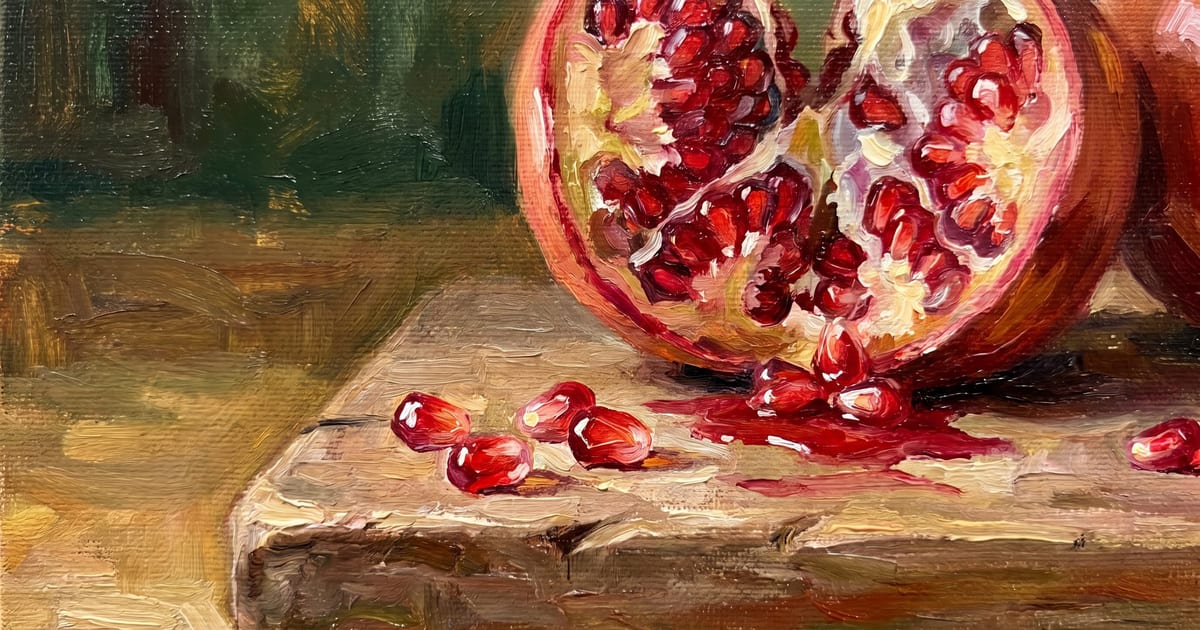
Most people eat the arils: the red jewel-like seeds, and discard everything else. The juice, the peel, the white membrane between the seed chambers. What they keep is sweet. What they discard is where the most studied bioactive compounds are.
This is the central fact about pomegranate that most content misses: the fruit's primary phytochemical complexity is in the parts people throw away.
What's in the pomegranate, and where
Arils (the seeds people eat): - Anthocyanins: responsible for the red color; antioxidant, anti-inflammatory - Vitamin C, vitamin K, folate - Punicic acid in the seed oil (omega-5 conjugated fatty acid) - Moderate fiber
White membrane and peel: - Punicalagins: the most abundant ellagitannins in any known food. Punicalagins, ellagitannins in which gallagic and ellagic acids are linked to a glucose molecule, are abundant in pomegranate peel. The peel represents 26–40% of the total fruit weight and contains the majority of the fruit's polyphenol load. - Ellagic acid - Punicalin, granatin A and B, corilagin, pedunculagin
Punicalagin isomers and ellagic acid derivatives are not present in the aril juice, but during industrial juice processing they are extracted from the husk and membrane surrounding the arils and released in large quantities into the juice.
This explains a counterintuitive result: commercial pomegranate juice, which mechanically presses the whole fruit including peel, often contains more punicalagins than hand-squeezed juice made from arils alone. The industrial process extracts compounds from the peel that hand-squeezing misses.
How the body uses punicalagins: the urolithin pathway
Punicalagins are not absorbed directly in the small intestine. They are hydrolyzed to ellagic acid, which itself is only poorly absorbed. Ellagic acid is largely metabolized by unidentified bacteria in the intestinal lumen to produce urolithins.
Urolithin A is the primary active metabolite. It has been the subject of growing research for: - Mitophagy enhancement (cellular cleanup of dysfunctional mitochondria) - Anti-inflammatory activity - Muscle health (clinical trial data emerging in older adults)
The critical detail: urolithin production is microbiome-dependent. Not all people convert ellagitannins to urolithins efficiently. Studies estimate that roughly 25–40% of the population are "non-producers" or low-producers of urolithin A, meaning they absorb pomegranate polyphenols but do not convert them to the active metabolite at meaningful levels.
This doesn't make pomegranate irrelevant for non-producers, the anthocyanins, vitamin C, and ellagic acid itself have documented antioxidant activity independent of urolithin conversion. But it does mean the most discussed benefits (mitophagy, longevity pathways) are not universally available from dietary pomegranate consumption.
Raw whole fruit vs. juice vs. processed products
Raw whole fruit (arils + membrane consumed): The membrane surrounding the seed chambers, the white, slightly bitter part most people discard: contains punicalagins. Eating the arils with some of the membrane intact, or pressing the whole fruit including membrane, delivers the full polyphenol profile. Enzyme activity (peroxidases, other fruit enzymes) is fully preserved. This is the ancestral form; pomegranates eaten fresh, seeds and all.
Cold-pressed fresh juice (whole fruit including membrane): Punicalagin-rich if pressed including the membrane and inner white parts. Enzyme activity preserved. This is the closest to whole fruit in nutritional terms.
Pasteurized commercial juice: Heat treatment (72–85°C minimum) degrades a proportion of punicalagins and destroys enzyme activity. Still meaningful amounts of punicalagins remain post-pasteurization due to the high starting concentrations, but it is a degraded product compared to fresh.
Pomegranate extract/supplements: Standardized for punicalagin or ellagic acid content. Convenient and concentrated. The ellagitannin-to-urolithin conversion pathway applies identically.
Pomegranate molasses, jam, syrup: Extended heat processing substantially degrades polyphenol content. Primarily a condiment, not a phytonutrient source.
Four thousand years of documented use
Pomegranate (Punica granatum) is native to the region from Iran to northern India and has been cultivated in the Mediterranean for at least 4,000 years. It appears in ancient Egyptian medical papyri (Ebers Papyrus, ~1550 BCE) as a treatment for parasites. It is mentioned in the Talmud, the Quran, and ancient Greek texts. Persian traditional medicine used pomegranate peel specifically, not the arils, for gastrointestinal complaints, confirming empirical knowledge of the peel's bioactive properties millennia before punicalagins were identified.
The convergence across Mesopotamian, Persian, Greek, and later Roman use of the peel as the medicinal part, not the sweet fruit, is the same pattern as the bromelain stem paradox in pineapple: the parts discarded by modern consumption habits are the parts traditional cultures specifically used.
In the primal context
Pomegranate is one of the few fruits Aajonus mentioned as acceptable in small amounts, it fits the "fruit as remedy" framing rather than "fruit as staple." The fat-with-fruit rule applies: consuming pomegranate arils with raw butter or alongside a meat-based meal blunts the fructose and glucose spike from the fruit sugars.
Practical consumption in the primal context: - Arils eaten with raw butter or raw cream, the fat slows absorption of fruit sugars - Fresh cold-pressed juice from the whole fruit (including membrane), consumed in small amounts (100–150ml), not as a beverage staple - The membrane eaten directly: it is edible, slightly bitter and astringent, and contains the highest polyphenol concentration per gram of any edible part of the fruit
Sources - Frontiers in Nutrition (2025). Phytochemicals and pharmacology of pomegranate. PMC. - PMC (2024). Anti-COVID-19 Potential of Ellagic Acid and Polyphenols of Punica granatum. PMC10180134. - Gil MI et al. (2000). Antioxidant activity of pomegranate juice. Journal of Agricultural and Food Chemistry, 48:4581-4589.
Key points
The summary search engines extract.- Pomegranate's primary bioactive compounds are punicalagins, ellagitannins found almost exclusively in the peel and membrane, not the arils (the edible seeds). Fresh juice extracted by pressing the whole fruit includes these; juice made only from arils does not
- Punicalagins are not absorbed directly, they are hydrolyzed in the gut to ellagic acid, which is then converted by intestinal bacteria to urolithins. Urolithin A is the metabolically active compound. Not all people produce urolithins efficiently (microbiome-dependent)
- Commercial pomegranate juice production extracts punicalagins from peel and membrane at scale, making commercial juice paradoxically richer in punicalagins than hand-squeezed aril juice. But heat processing during pasteurization degrades a portion of them
- The whole fruit eaten raw with seeds delivers punicalagins from the membrane + anthocyanins from the arils + fiber + full enzyme activity. This is the ancestral form and the most complete nutritional profile
- Pomegranate has been used medicinally in Mesopotamia, Persia, and the Mediterranean for at least 4,000 years, one of the most documented ancestral medicinal fruits