Raw Milk in Norway. Banned Bottle, Raw Shelf
Norway bans the raw bottle from shops and keeps raw cultured dairy on the shelf next to it. The law that shut the tap and the shelf that never noticed, with 228 verified places.
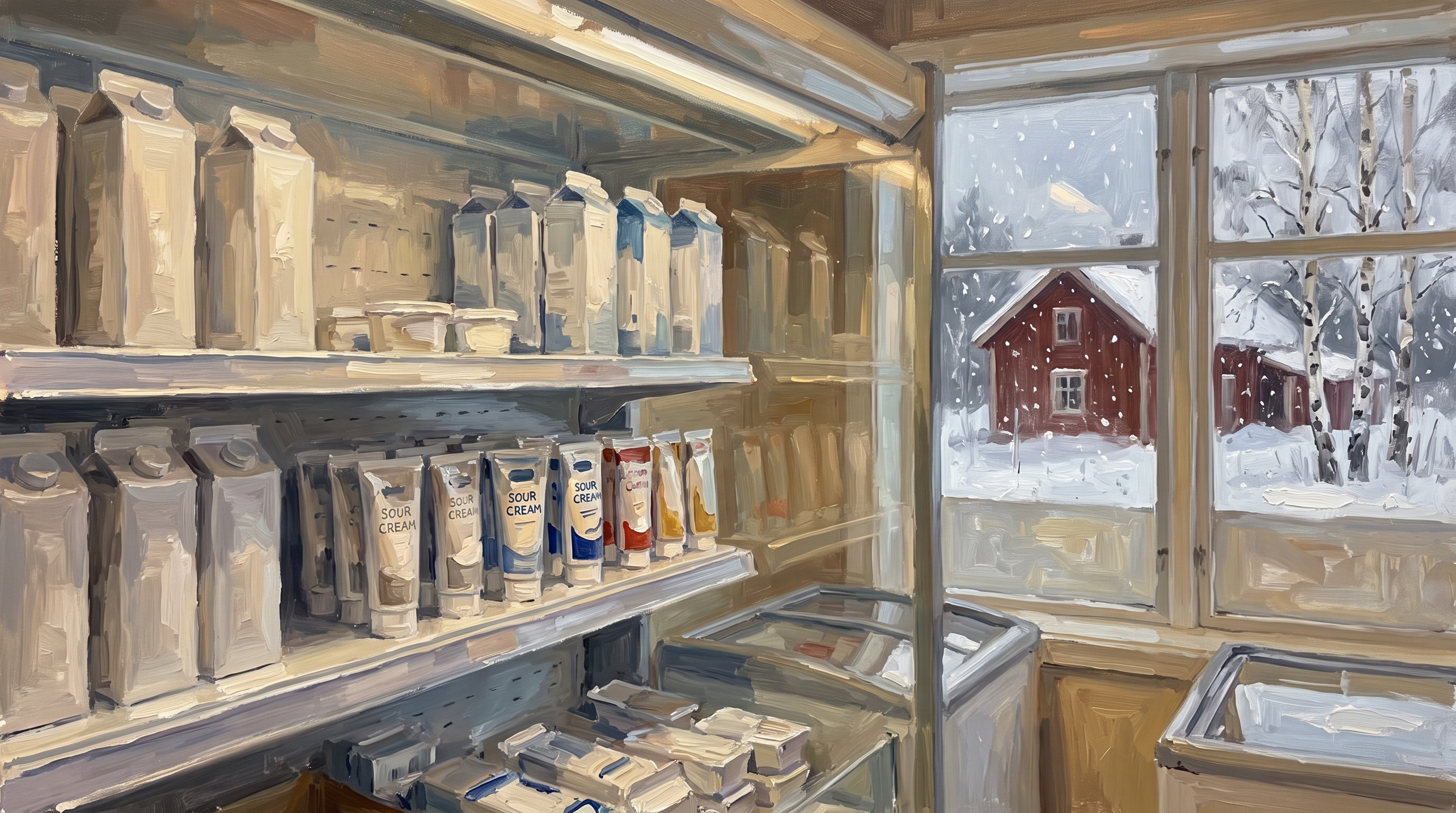
The bottle is banned. The shelf is full.
You land in Norway with a simple plan. Find the word råmelk in an Oslo supermarket and fly home with a bottle of Norwegian raw milk. The plan dies at the door. That liter does not exist. Liquid raw milk is not sold in shops in Norway.
Now look one shelf down. The kulturmelk carton from the farm brand says upasteurisert on the label. Unpasteurized. So does the sour cream in the tube next to it. The block of butter and half the cheese chiller come from raw milk, and they say so in the small print. An ordinary Norwegian supermarket, the kind you find in any town of twenty thousand people, carries half a chiller of raw dairy. Nobody chases it. Nobody hangs a warning sign above it.
That contradiction is not an accident. It is written into the law, paragraph by paragraph.
What Norway's raw milk law actually says
The text is the forskrift of 30 June 1995, number 636, Norway's milk regulation, published on Lovdata. Its § 20 opens with an iron sentence. All milk placed on the market must be heat treated. If the rule stopped there, Norway would be one more name on the prohibition list. It does not stop there.
First door. The same § 20 allows unpasteurized milk to be sold straight to the consumer from the farm or the seter, the mountain pasture dairy. For use in the buyer's own household. With two conditions that give it character. The sale must be occasional and it cannot look like a shop. The exact word in the text is butikksalg, shop sale. No shop look. A farmer fills your own container in the yard, fine. A shelf with bottles and a price tag, no.
Second door. The regulation demands heat treatment for milk used to make products, unless other measures guarantee the safety of the product. That clause is the door fermentation walks through. The products chapter also keeps a section for goods of traditional character, made by historically recognized methods and protected by national rules. And § 19 completes the picture. What the farm produces can be sold at the place of production and at markets. Also through local shops selling directly to the consumer. Always from the farm's own herd.
Translation. The Norwegian state shut the tap and left the pantry open. The fresh stuff ends in the farmyard. The fermented stuff reaches the supermarket.
What is on the shelf
The flagship product is called upasteurisert kulturmelk, cultured milk, unpasteurized. Kulturmelk is Norway's soured milk, the breakfast glass on the farms long before industrial pasteurization reached the country. One gårdsmeieri, a farm dairy in Rogaland in the southwest, Jerseymeieriet, carries it into ordinary retail through a wholesaler. It is not a fairground curiosity. It is a regular product, with a batch number and a price.
Tradition did the work the law did not know how to name. Milk soured on its own in the cool of the barn, with its own bacteria, and the whole country grew up on that glass. The 1995 regulation could not treat that product as a danger, because it had been pantry for centuries.
The part nobody tells you
Aajonus said it straight. Sour cream comes predigested, sour cream is predigested (Aajonus, Workshop GC 2013). Kefir and yogurt are fermented dairy, food that is already predigested and asks for far less hydrochloric acid (Aajonus, Workshop HA 2008). And the bacteria that do that work do not have to come from a packet. They have to come from the milk itself (Aajonus, Workshop GC 2013). I do not know which bacteria that farm in Rogaland works with. I know what he taught.
Fermentation is not raw milk's plan B. It is raw milk with digestion already underway. That is why the Norwegian shelf is not an ironic concession from the regulator. It is living tradition that the law protects without meaning to. The country that will not sell you fresh milk in a shop sells it to you fermented by its own bacteria, raw, on the pasteurized yogurt line. And nobody looks at it.
What the Norway raw milk map shows
The atlas carries 228 verified places in Norway today, 187 gold and 41 bronze. And here is the number that breaks the pattern of this series. 168 of those 187 gold points are ordinary shops. Only 19 are farms selling direct. Backwards from the rest of the European map, where the farm rules. In Norway the supermarket rules, because the law sent fresh milk to the farmyard and left the fermented stuff on the shelf.
Field practice. In a shop, look for the word upasteurisert. You will find it on the kulturmelk carton and on the tube of rømme. Rømme is the sour cream Norwegians eat with coffee and with waffles. On a farm, remember the rule in the legal text. Occasional sale, no shop look, for your own home. Bring your own container and ask about the farm, not the shelf.
Norwegian law did not kill raw milk. It moved it. The fresh milk lives in the farmyard, rationed. The fermented milk lives large in the supermarket. The milk is the same. What changed is what each piece of paperwork decided to protect.
If you want to see it with your own eyes, the map is below. 187 gold points. Start at the shelf.